
Pressure and meter tests
The plumber has every tap shut and looks at the meter, then pressurizes the lines. A meter that keeps turning, or a gauge that sinks, says a pipe is losing water somewhere in the house.
Water that escapes inside a wall, under a floor or along a buried line leaves few clues. A climbing water bill or a damp spot can be the first sign, and we trace the leak before anything is opened up.
Once the leak is located, the plumber repairs only that section of pipe and puts the surface back, so the damage to your house stays as small as it can.
The plumber has every tap shut and looks at the meter, then pressurizes the lines. A meter that keeps turning, or a gauge that sinks, says a pipe is losing water somewhere in the house.
Sensitive microphones pick up the sound of water leaving a pipe, which lets the plumber mark a spot on the floor or wall.
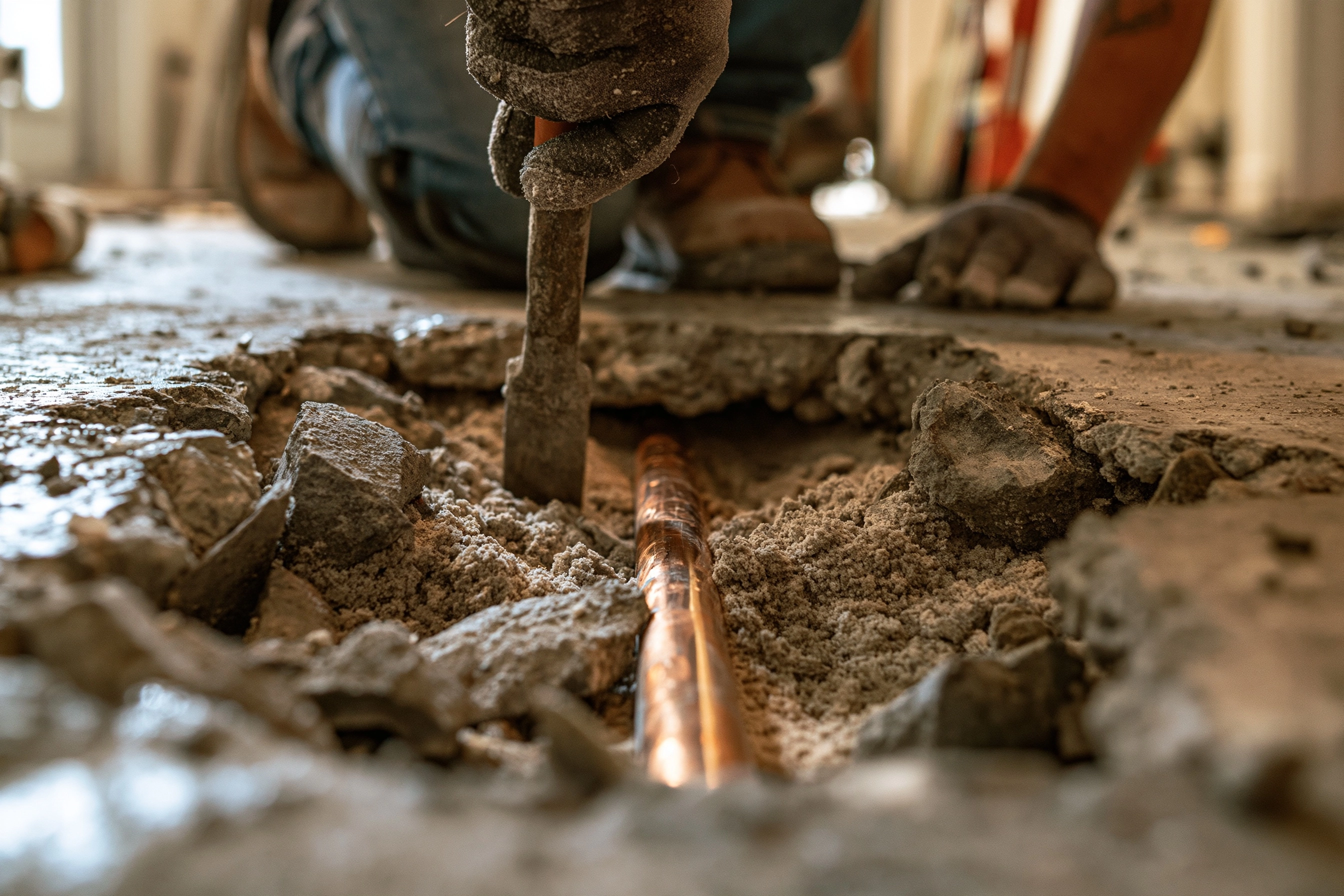
Once the spot is marked on a concrete floor, the plumber breaks out a small opening right there and either mends the pipe or runs a new line around it.
A soft, wet patch of lawn or a meter that moves with the house shut off can mean the buried line from the street is leaking, and the plumber traces its path to the fault.
Cutting at random through a floor or wall costs time and creates damage you did not need. Pressure testing and listening narrow the search to a short stretch of pipe.
A repair can then be limited to that stretch, whether it means a new fitting, a replacement section or a new run around the damaged spot.
Not quite. Pressure tests, a meter check and listening gear narrow the search, so any opening that is needed can be small and placed in the right spot.
A leak in an old line may lead to replacing the pipe, which is covered under repiping. For active flooding there is emergency plumbing, and the homepage lists our other work.
Call us to discuss your current issue and how we can assist you. The call is free and you get a free, personalized estimate with no obligation. We're here to help.
Call (855) 321-3426